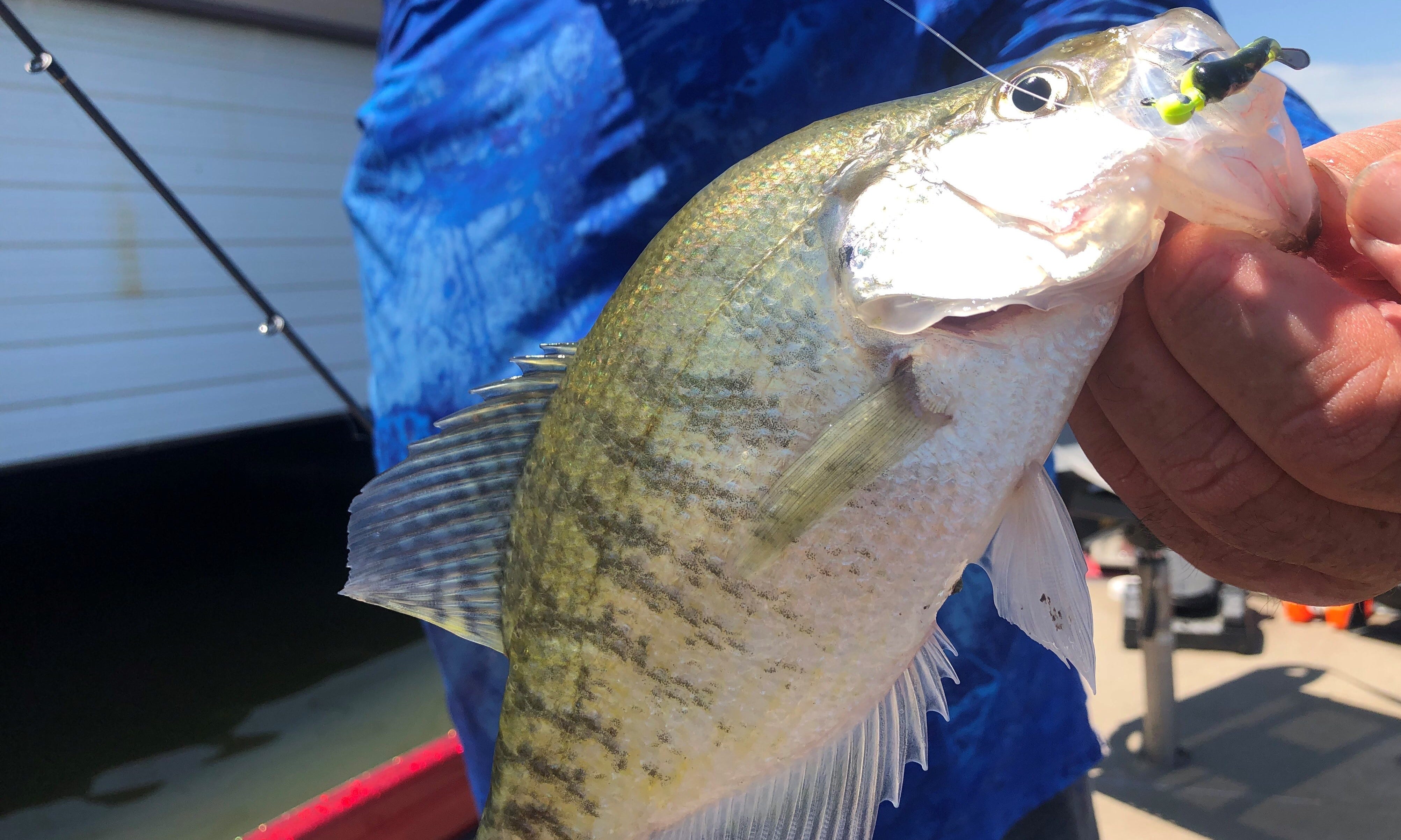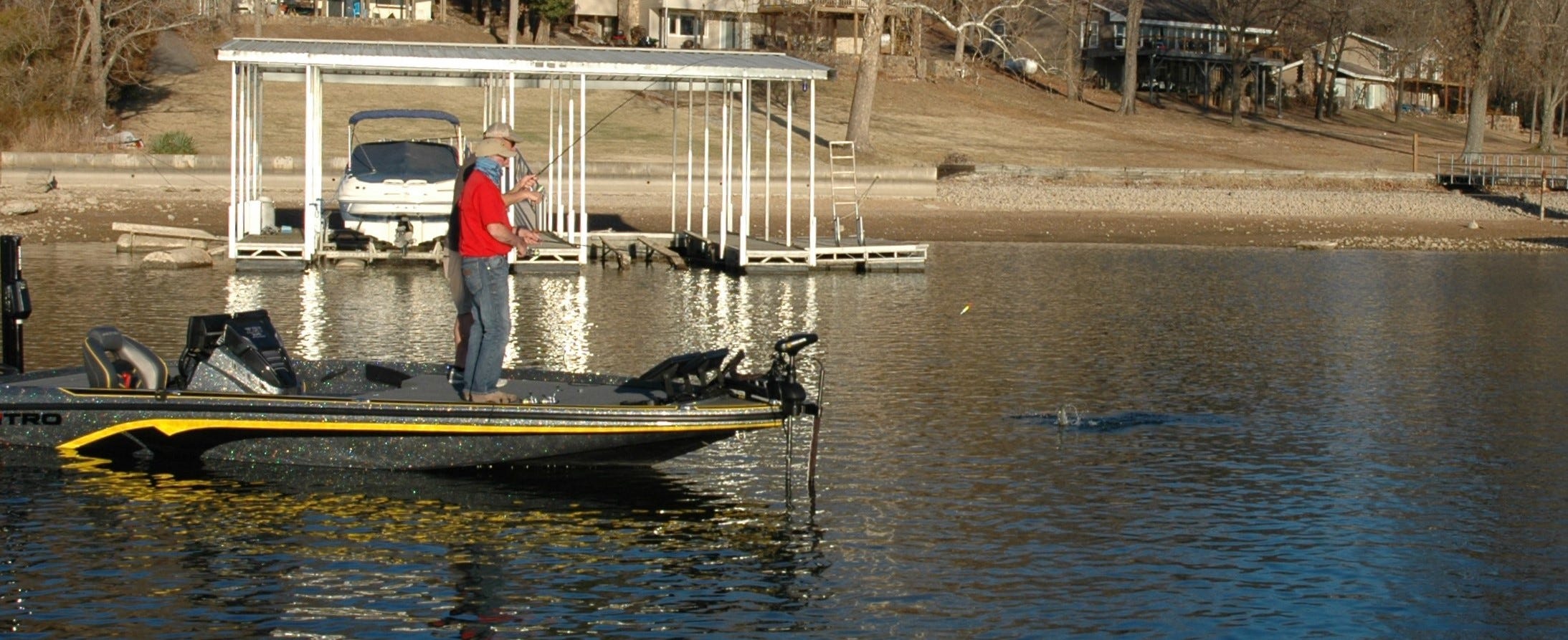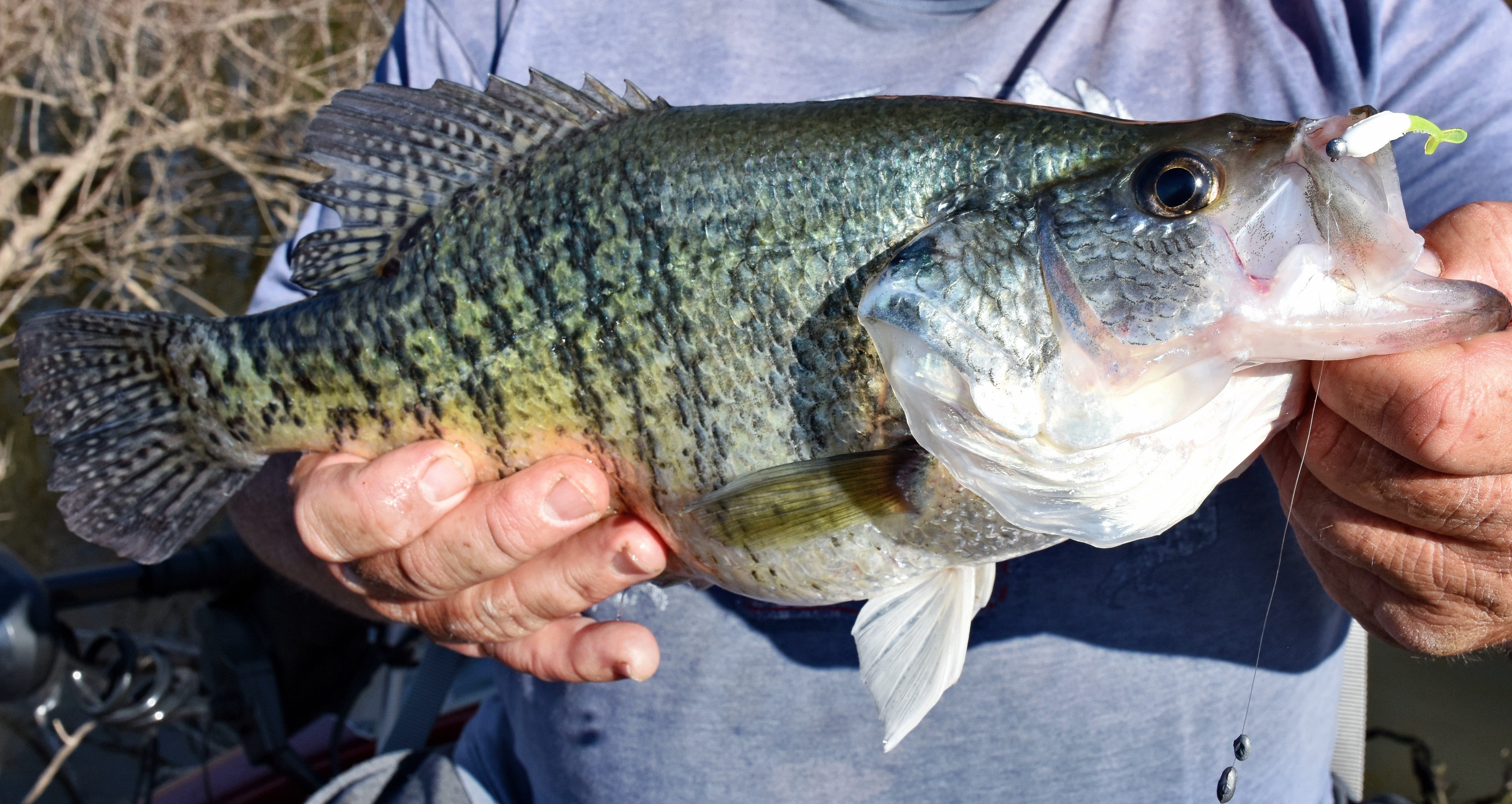
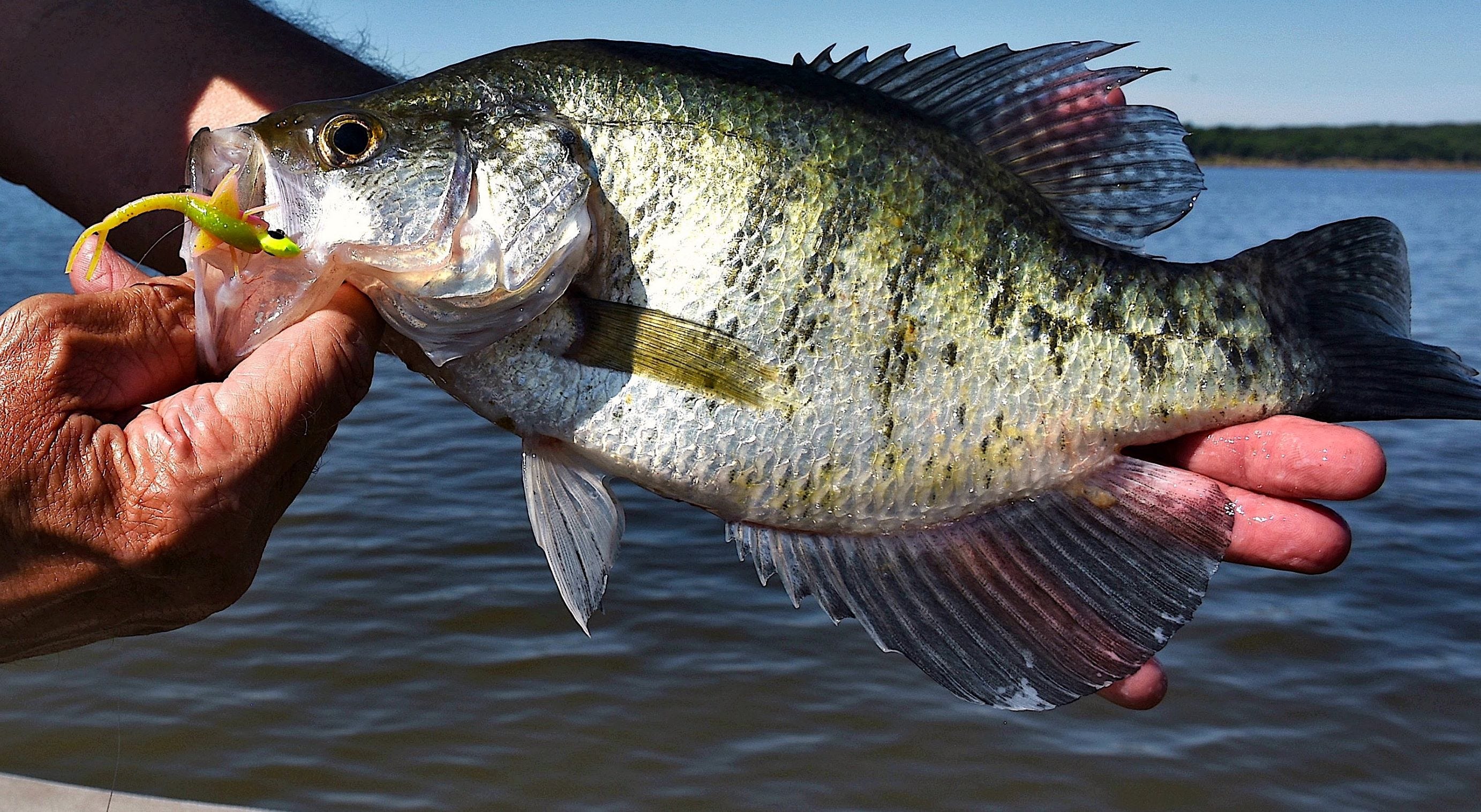
Learn how expert crappie angler recognize the end of the spawn and how they adjust fishing approaches to continue catching spring crappie.
Cold fronts have shut down the shallow-water action on certain days, but most of the time, the crappie have been aggressive and attacked nearly anything thrown near their spawning beds. However, in the last few days the shallow-water bite has been tapering off, so you begin to wonder whether those fish you were catching along the spawning banks have been wiped out by fishing pressure or if the crappie have quit spawning.
Crappie guides and tournament veterans look for certain signs to determine if the spawn is entering its final stage.
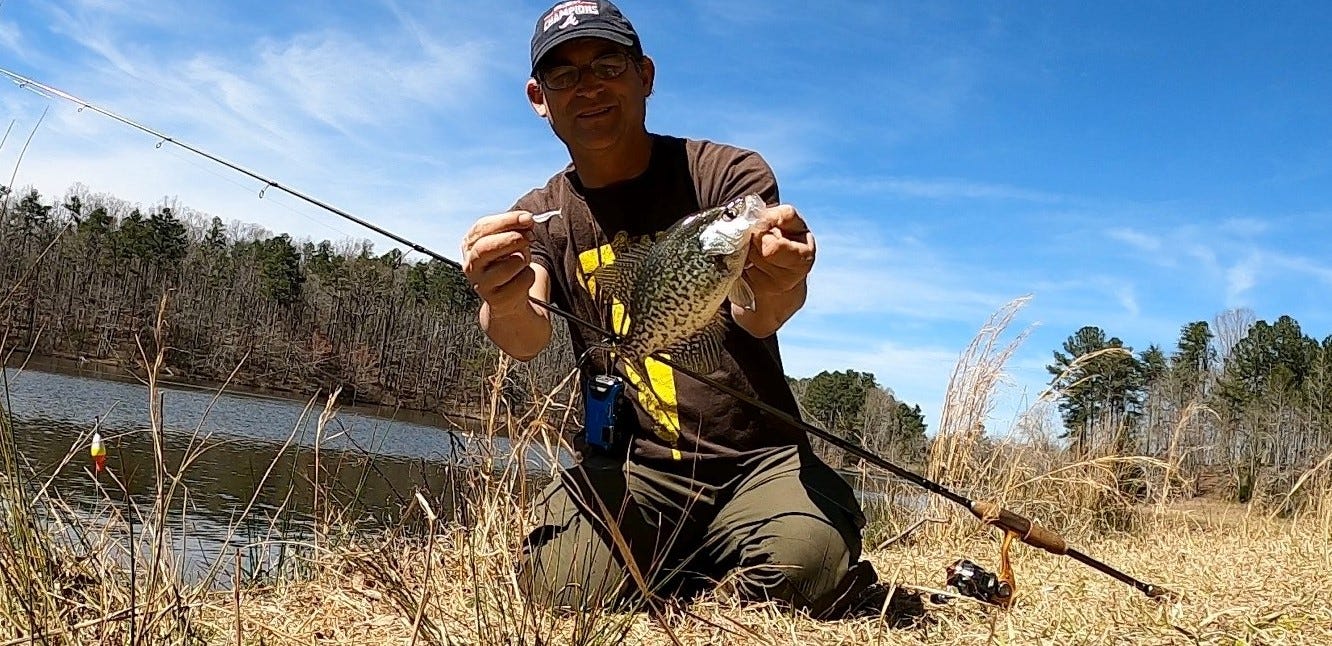
Spring brings some of the year’s best opportunities for crappie fishing from the bank. Learn how to find and catch more crappie with a shoreline approach.
Everything looked perfect for bank fishing for crappie. The water color, bottom makeup, bank slope and cover mix all seemed ideal. The only thing missing was the crappie – at least any crappie that were willing to bite!
So, I began walking and casting, targeting scattered laydowns and stumps and making “search” casts between pieces of cover. Maybe 100 yards from my starting point the chunk rock along the lake’s edge turned to gravel and the bank got a little flatter. Scattered wood a modest cast’s distance from the shore seemed shallow but looked inviting for crappie fishing.
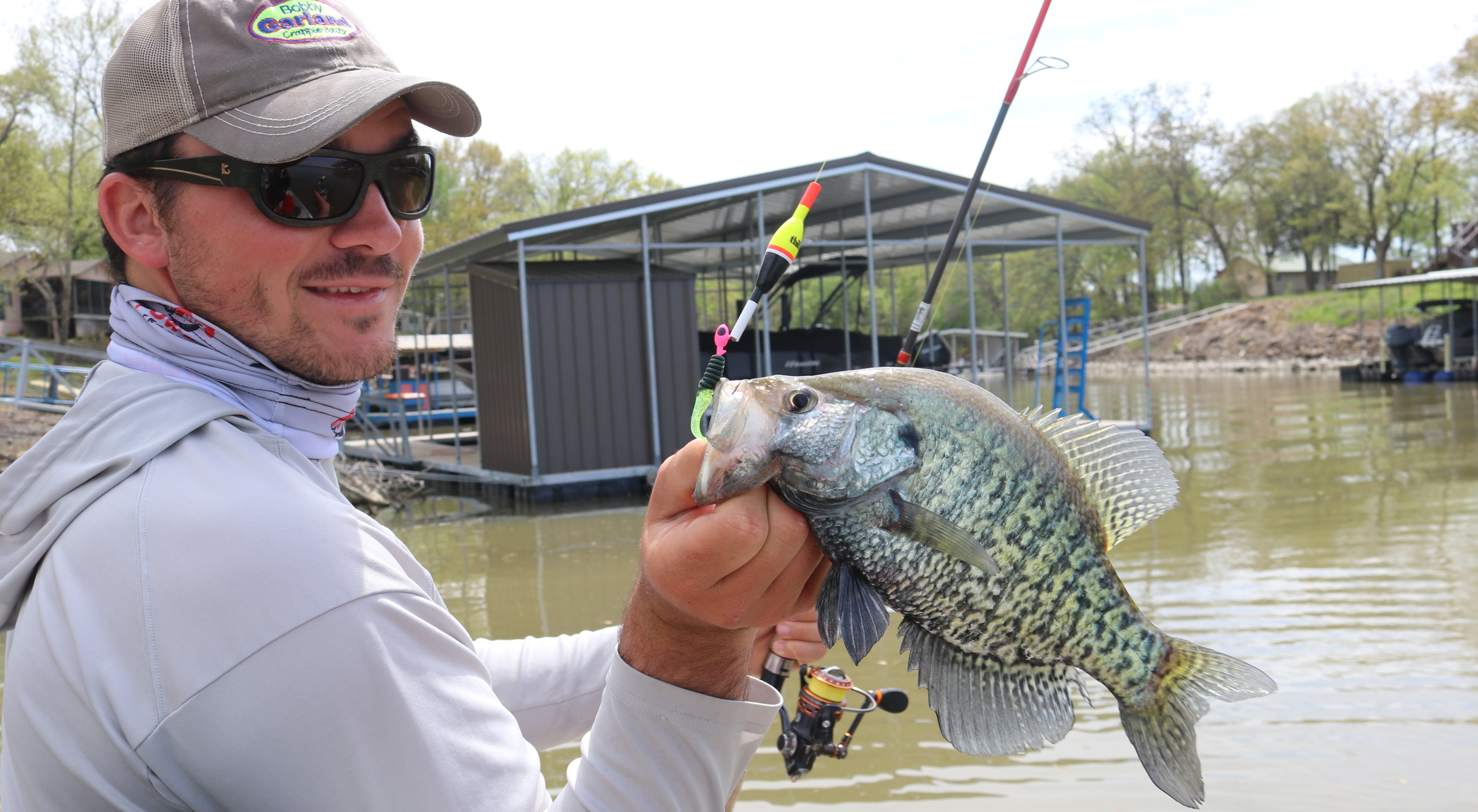
I clipped a spring float about 18 inches from my jig and cast tight to the first piece of wood. The float barely got upright before racing sideways, and I set the hook into a solid crappie. Repeating that cast produced the same result. Twice. The next piece of wood produced a repeat performance. I had found the right set up, setting the stage a fun day of bank fishing for crappie.
Different crappie fishing jigheads vary in many ways. We’ll examine important variables and tell how to choose the best jighead for every situation.
Glitzy soft-plastic crappie lures, with their fish-catching designs and colorful identities, get the glory in crappie fishing while the journeyman jighead silently tags along but does the heavy lifting – literally.
Success draws attention, and that is certainly the case when a splashing livewell or basket full of slabs echoes loudly and proudly across the boat ramp or dock at the end of an outing. All ears within hearing distance strain to hear the answer when someone dares ask, “Whatcha catch ‘em on?”
No doubt it’s more fun to hear a response with bait names like Slab Hunt’Rs and Slab Slay’Rs, and colors called Purple Monkey and Electric Chicken, than, “a 1/8-ounce white jighead with a size 1 hook.” Yet, jigheads need love too, for without them most crappie baits are little more than tacklebox candy.
Floats or bobbers come in many sizes and shapes and in fixed and slip-float configurations. This float fishing guide removes the mystery.
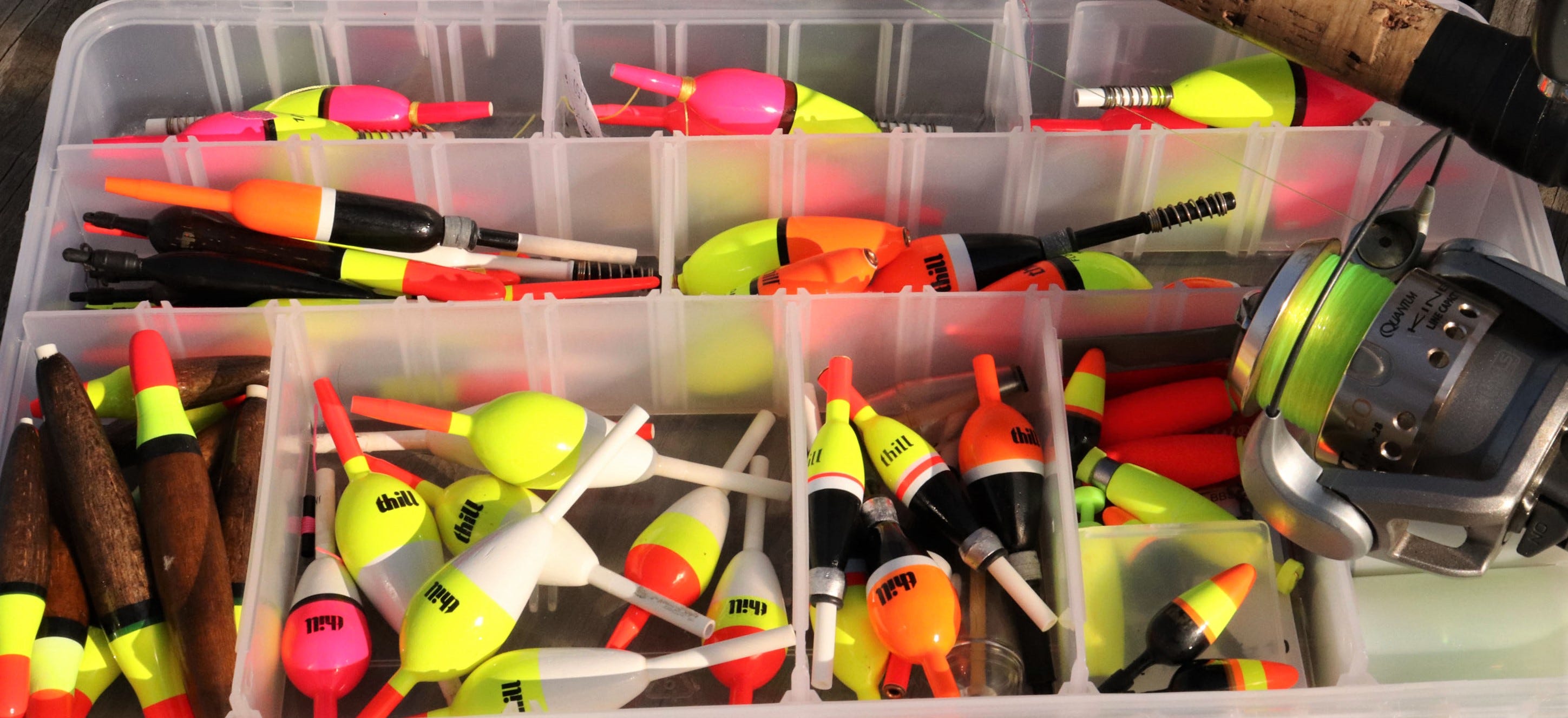
The mention of bobber fishing commonly calls up a mental image of an idyllic pond setting with a youngster watching a cork on the water’s surface. However, floats (commonly called bobbers) have come a long way. While the basic mechanics remain the same, many of today’s floats are designed to be more bite-sensitive, are created for specific purposes and are integral to many anglers’ arsenals.
Depending on the intended angling technique, a float could be part the presentation for any freshwater fish. Bluegills, crappie, smallmouth bass, white bass, trout, bowfin and catfish are among the fish I have targeted with a float. The line-up of Thill Floats encompass a variety of floating bite-indicators for still-water, current, and long-distance casting.
Pre-spawn crappie fishing delivers some of the best action of the year, and the fish’s behavior lends itself ideally to fishing and jig beneath a bobber.
A childhood thrill returns to Terry Blankenship every spring when pre-spawn crappie fishing heats up at Lake of the Ozarks. The Missouri guide and tournament angler recalls how excited he would get watching a bobber zip underwater when he was a kid, bobber fishing for crappie. Blankenship continues to experience that excitement today, albeit with a more sophisticated bobber setup.
“We all love our bobbers,” Blankenship said. “Bobber fishing for crappie is a little bit like topwater fishing for bass. It’s just something, if you have done it a bunch, you are kind of focused on that bobber, and when you are fishing with artificial lures instead of minnows you have to be pretty observant and pretty quick with it. It kind of keeps you a little tense if you feel like you are in a position to get a bite. It winds up being pretty much like the excitement of a topwater bite because of the way crappie sometimes hit it and knock it to where it goes down so fast, but other times they just barely nudge it or turn it sideways. That’s why you really have to pay attention to it.”
Learn how five expert crappie anglers are catching fish right now and how to catch spring crappie on your home waters.
It seems the weather and crappie spawning behavior team up every spring to drive anglers crazy. That’s certainly happening now, as we hit mid-April.
So, I reached out to five “fish almost every day” anglers from South Carolina to Oklahoma for real time reports on what the crappie are doing and how each angler is catching fish. You’ll see how varied the approaches can be for catching the same black and white crappie that we all pursue in our favorite spots.
Perhaps, 2022 is the year for you to try something new. You’ll never go wrong in borrowing knowledge and tactics from any of these five crappie experts.
Learning more about spring crappie behavior related to the spawn can help you catch more fish.
The crappie spawn has major impact on fish behavior during spring and opens some of the year’s best opportunities for catching crappie from shallow water. Most anglers know that much. Where questions arise are with details about things like when the fish move up, how long they hang around, the types of areas they favor, and, consequently, how all that impacts spring crappie fishing strategies.
With such questions in mind, we turned to Josh Johnston, Fisheries Supervisor for the Oklahoma Department of Wildlife Resources, and Gary Dollahon, brand manager for Bobby Garland Crappie Baits. Significantly, both also speak from the perspective of being avid crappie anglers.
Spring weather can throw curveballs to crappie fishermen. Here’s how to adjust and catch crappie despite ever-changing conditions.
There’s truth to an old English Proverb that brings hope this time of year to the hearts of crappie fishermen everywhere. . . “No matter how long the winter, spring is sure to follow.”
Sure, you can catch crappie throughout the year, but there’s something extra nice about spring crappie fishing. The weather is warming, the trees are beginning to bud, and the slabs are hungry and moving up to spawn.
But it’s not all a bed of roses. Spring crappie fishing also including rising water, falling water, bizarre cold fronts and those ever-present in-like-a-lion winds that can blow even the best-planned trips up onto the bank.
Warming water temperatures prompt crappie migrations toward spawning areas. Learn how to find and catch spring crappie.
When crappie initiate their move toward spawning areas, anglers from Oklahoma to Connecticut head to the lake!
The primary pre-spawn and spawn trigger is water temperature. Across the country, crappie pre-spawn movements begin when water temperatures approach 50 degrees, with crappie moving to staging areas close to spawning flats and banks. When the shallows maintain a temperature close to 60 degrees for several days, bedding may begin. Nests are constructed moderately firm bottoms, generally in protected areas. This yearly ritual may begin as early as February in the Southern states or as late as early July in states along the Canadian border.
Learn how to make the best use of live sonar technology to improve your crappie fishing efficiency and catch more fish.
Early “Fish finders” were used primarily to find fish, as the term suggests, and to determine bottom depths and locate structure. Over time, technology has evolved, creating far clearer and more detailed pictures and many types of views and allowing anglers to determine bottom make-ups and find both structure and fish far more effectively
The latest electronics technology, live sonar, makes it far easier for anglers to recognize fish species, target specific fish and see how the fish react to lure presentations. It is highly popular for crappie fishing and extremely helpful if you know how make the best use of it.
Live sonar technology, which reveals high-resolution images of fish swimming and responding to lures, is available now via Garmin’s Panoptix LiveScope, Lowrance’s Active Target and Humminbird’s MEGA Live Imaging. For Dustin McDaniel, an Oklahoma tournament angler and guide (GFB Outdoors Guide Service, 417-437-5047), the ability to interpret what he is seeing on his Garmin 1222 unit with its Panoptix LiveScope transducer, has become a game-changer.
Learn how four crappie guides target deep-water crappie during late winter.
The evolution of electronics with live sonar has changed how many anglers catch crappie during winter. Now crappie anglers with live sonar chase roamers as they scan for the larger crappie scattered over deeper water.
Before you stop reading this article because you don’t have live sonar, Bobby Garland Pro Barry Morrow is going to explain how to catch crappie this time of year without those tools, but first let’s talk about catching roamers.
Hiring a crappie guide can be extremely beneficial and more cost-efficient than you might imagine. We spoke with several veteran guides about how to make the most of a guided fishing trip.
The start of a phone call once had crappie guide Brad Chappell wondering if he had unknowingly caused real problems. The caller said her husband had spent $6,000 on crappie gear and wanted to know why Chappell was “making” him buy all that stuff. Her husband, a fairly recent guide client of Chappell’s had been calling regularly since the trip to ask specifics about Chappell’s gear – one week about electronics, the next about rod holders, the next about baits… But Chappell hadn’t TOLD him to buy anything!
Then, with a smile in her voice that Chappell could hear, the caller said she was really calling to thank him because while her husband really had spent that much money, the two of them were truly enjoying crappie fishing together!