
- Dec 4, 2020
How to Troll for Walleye with Crankbaits - 8 Top Late Season Tips
Targeting late season walleye can be brutally cold, but the fishing can be red-hot, which is why knowledgeable anglers continue to troll for walleye even after fall has realistically given way to winter’s grip.
By Jeff Samsel
Ice locks in many northern lakes, and winter winds deem the biggest waters unfishable some days. When and where you can get out, though, late-season walleye fishing can be outstanding, with trolling for walleye with crankbaits often yielding the best results and the strongest prospects for trophy fish.
Paul Castellano of Cast Adventures guides on the Lower Niagara River and lakes Ontario and Erie for a variety of sportfish species. Late in the year, when conditions get right near the mouth of Lower Niagara, he spends a lot of time trolling for walleye and connects clients with large numbers of trophy fish.
We asked Castellano for tips on how to successfully troll for walleye with crankbaits late in the year and continuing through the winter. Some tips are season specific. Others are important year-round.
-
Pay Attention to Forage
You’ve heard it before, and not only about late-season walleye, but it is absolutely critical to this situation. Walleye generally aren’t relating to structure or cover this time of year. They suspend and follow food, primarily open water baitfish species.
Paying attention to forage becomes extra important when you’re talking about trolling a crankbait like a Bandit Walleye, a Smithwick Rogue or a Bomber Long A because these lures are designed to imitate baitfish.
The location and depths of schools of gizzard shad, alewives and shiners dictate not only where Castellano trolls, but also his trolling depth range and the sizes, shapes and colors of lures he fishes first.
-
Look for Current
Current is critical to Castellano’s late season strategy because the baitfish just mentioned relate heavily to moving water. Beyond drawing baitfish, current positions both the bait and the walleye predictably and prompts the walleye to feed more actively.
The Lower Niagara and areas that are close enough to the mouths of the Niagara, Welland Canal and various smaller Lake Ontario tributaries to be significantly affected by current become very important late in the year.
-
Consider Water Color
A change in water color in key areas signals the start of the best late-season walleye bite for Castellano and actually helps trigger the action. After heavy fall winds and resultant waves stir up Lake Erie – typically during late fall – the off colored water dumps into the Niagara and Welland Canal.
When the dark water finds its way to Lake Ontario, baitfish are drawn to the stained water, which is more readily warmed by the sun. The walleye move in for the buffet and feed more actively in the off-colored water, where they can ambush prey effectively.
Specifics vary by waterway, but anywhere wind, rainfall or current create stained areas adjacent to substantially clearer areas, the walleye tend to feed more actively in the stained water or along the edge than in the clear water.
-
Slow Trolling Speeds
Speed is a critical factor any time you troll for walleye with crankbaits, and Castellano’s approach to speed always involves experimentation, altering speeds on a regular basis and paying careful attention to his precise speed every time a fish bites. “Speed is huge,” Castellano said, “and even a slight change of speeds can make all the difference.”
While patterning the most productive speed is an ever-present consideration, the major difference late in the season is that the range of trolling speeds Castellano works within is slower. The baitfish are naturally slowed in the cool water and slower trolling speeds offer a more natural match for the behavior of the forage – along with lessening the need for walleye to chase. Castellano will troll as slowly as 1 mph this time of year and will mostly work within a 1.3 to 1.6 mph range.
-
Mix it Up
Because of quickly changing conditions from winter’s parade of cold fronts and due to the variety of baitfish species using areas, walleye can turn very picky late in the year, ignoring normally productive lures and devouring others. Castellano experiments with lures that offer a big range of shapes and swimming actions, as well as mixing up colors. He then pays careful attention to which lures get bit and continues to refine the pattern as the day progresses.
8 Great Crankbaits for Walleye Trolling
Cotton Cordell Ripplin’ Red Fin
Cotton Cordell Magnum Walleye Diver
Beyond experimenting with lures to find the right shape size and action, Castellano often varies leaders, especially after he has figured out the right lure. He runs braid on his reels and will go all braid for some lines and add a section of mono leader to others, having found this to slightly alter the running depth and action of the same lure. If the ones rigged one way start getting all the bites, that is important patterning information that can help him catch far more fish that day.
-
Standardize Rods & Reels
As much as Castellano advocates changing speeds, baits, colors and other details to pattern fish, he is equally adamant about keeping certain controls constant in order to best see what is making the difference. He wants the same action for all of his rods so he can see differences in how baits are moving and detect subtle strikes. He also uses all line counter reels that have been carefully calibrated because knowing exactly how far back each crankbait is running is critical to efficient patterning, which is the key to catching most fish.
-
Use Scent Sense
Castellano is a major advocate of adding gel or spray-on scent to crankbaits, and he considers this extra important through winter when cold fronts can make fish more tentative.
The scent serves a two-fold purpose for Castellano, with the most obvious being an attractant to make a crankbait seem more like food.
The second purpose, which he considers equally important, is to cover any negative unnatural scent that might be on his hands. While the walleyes don’t seem to be line shy during winter, which is something many people worry about, Castellano has found the smell of gasoline, sunscreen or a host of other impurities on the hands of someone who is handling crankbaits to have a major negative impact on fishing success.
-
Handle With Care
Fish handling might not affect today’s fishing, but it affects things in the big picture when you’re catching big fish that are potentially important spawners.
“Late-season fish are very heavy because they’ve been gorging on so many baitfish,” Castellano said. “When they are held vertically, they can’t always support the weight of their bodies and it can cause dangerous tearing around the gills.”
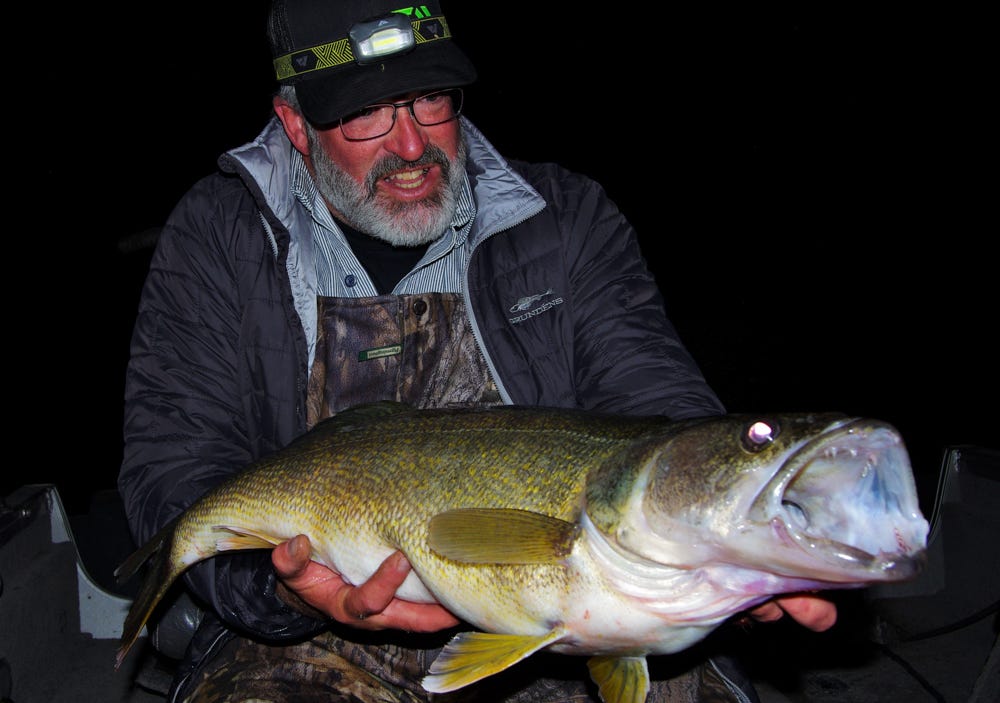
Castellano said that walleye always need to be supported horizontally when they are being unhooked and for photos. He suggests measuring fish instead of weighing them, believing that offers a better gauge of quality anyway. If fish are to be weighed, he suggests using a scale with some type of cradle.
Ready to Go?
Please visit Lurenet.com for all these lure selections above and to view more how-to content.