Learn how to make the best use of live sonar technology to improve your crappie fishing efficiency and catch more fish.
Early “Fish finders” were used primarily to find fish, as the term suggests, and to determine bottom depths and locate structure. Over time, technology has evolved, creating far clearer and more detailed pictures and many types of views and allowing anglers to determine bottom make-ups and find both structure and fish far more effectively
The latest electronics technology, live sonar, makes it far easier for anglers to recognize fish species, target specific fish and see how the fish react to lure presentations. It is highly popular for crappie fishing and extremely helpful if you know how make the best use of it.
Live sonar technology, which reveals high-resolution images of fish swimming and responding to lures, is available now via Garmin’s Panoptix LiveScope, Lowrance’s Active Target and Humminbird’s MEGA Live Imaging. For Dustin McDaniel, an Oklahoma tournament angler and guide (GFB Outdoors Guide Service, 417-437-5047), the ability to interpret what he is seeing on his Garmin 1222 unit with its Panoptix LiveScope transducer, has become a game-changer.
Learn how four crappie guides target deep-water crappie during late winter.
The evolution of electronics with live sonar has changed how many anglers catch crappie during winter. Now crappie anglers with live sonar chase roamers as they scan for the larger crappie scattered over deeper water.
Before you stop reading this article because you don’t have live sonar, Bobby Garland Pro Barry Morrow is going to explain how to catch crappie this time of year without those tools, but first let’s talk about catching roamers.
Hiring a crappie guide can be extremely beneficial and more cost-efficient than you might imagine. We spoke with several veteran guides about how to make the most of a guided fishing trip.
The start of a phone call once had crappie guide Brad Chappell wondering if he had unknowingly caused real problems. The caller said her husband had spent $6,000 on crappie gear and wanted to know why Chappell was “making” him buy all that stuff. Her husband, a fairly recent guide client of Chappell’s had been calling regularly since the trip to ask specifics about Chappell’s gear – one week about electronics, the next about rod holders, the next about baits… But Chappell hadn’t TOLD him to buy anything!
Then, with a smile in her voice that Chappell could hear, the caller said she was really calling to thank him because while her husband really had spent that much money, the two of them were truly enjoying crappie fishing together!
Fishing from marinas and other docks provides a great way to consistently catch crappie during the coldest time of the year. Here’s everything you need to know.
You will never hear Chris Edwards call himself a winter crappie dock-fishing expert, but considering this avid outdoorsman’s history with the activity and the container of splashing slabs hanging in the water nearby, there’s no doubt he could.
Edwards has a lifetime of dock fishing experience across Oklahoma that began in his youth when his parents had a place on Grand Lake O’ The Cherokees. Thereafter, he’s always had a dock somewhere in the state – Texoma, Keystone, Ft. Gibson and Eufaula. He’s made sure of that with one season and one purpose in mind: January to March crappie fishing.
Learn the value of a float and a jig used together for mid-winter crappie fishing and how two guides use float strategies to put more fish in the boat.
“Often they won’t pull it under,” Lee Pitts said about the float portion of his Float and Fly rig. “It’ll just tip a little or start easting sideways.”
Pitts knows. As a crappie guide on legendary waters of Weiss Lake, Pitts spends most winter days on the water. Winter delivers some of the best action of the year, and one of his most productive crappie fishing techniques when the water gets cold is the float and fly approach, which refers to fishing a jig beneath a set float for slow, subtle presentations at a prescribed depth.
Beaver Lake crappie guide Greg Robinson also relies heavily on floats for winter crappie fishing. That surprises many people, Robinson noted, because they only associate bobbers with extra shallow water. However, Robinson and Pitts are commonly presenting jigs 6 to 10 feet deep. The key is that the float suspends an offering in the strike zone and allows for the extra slow and subtle presentations that are sometimes needed for winter crappie fishing success.
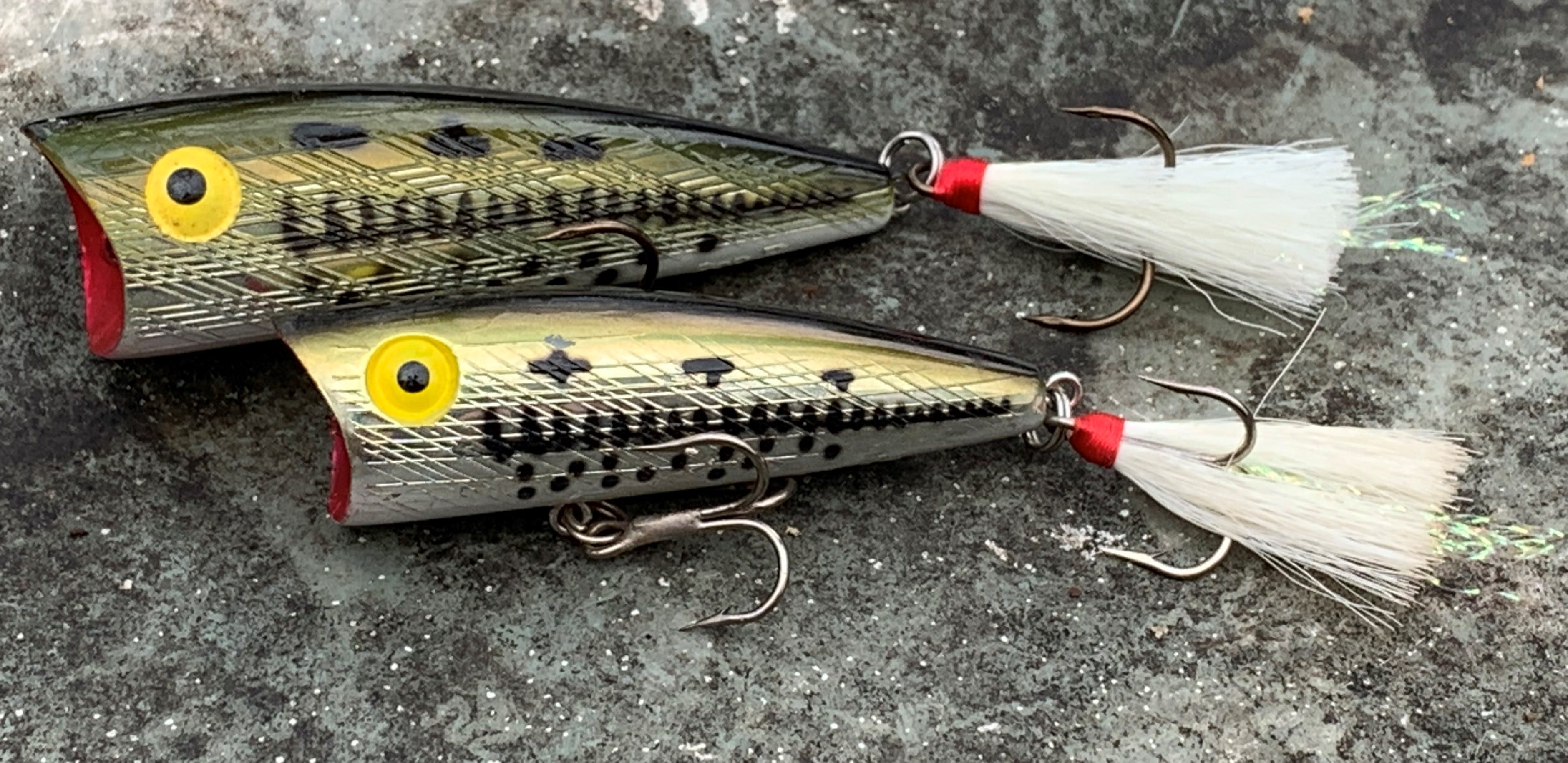
Learn about different Pop-R models and when to use each to maximize success.
You know the Rebel Pop-R. It’s the most iconic popper in the fishing world, a name commonly used to reference various poppers and the unofficial template for many other popping lures.
You may not realize that the Rebel Lures makes several different Pop-R models, all with much in common but each a little different. We’ll look at all the Pop-Rs and dig into how each is distinctive to help you pick the perfect Pop-R for any given situation.
Ledges hold big concentrations of crappie this time of year. Learn how three veteran anglers find and catch crappie from ledges.
Crappie stay on the go in autumn, either looking for a quick meal during favorable conditions or seeking shelter, when the weather turns nasty. Some of the best places to find fall crappie that are moving are ledges, which are available in almost every lake in the country.
“A ledge in our part of the country is definitely a change in water depth, and most of the time, it is a pretty abrupt, pretty quick change,” said Freddie Sinclair, a full-time guide on North Carolina’s Jordan, Harris and Falls lakes. “Most of our ledges are hard bottom and rock.” Sinclair noted that a ledge could be a main channel drop along the old river channel or a creek channel drop in a cove or bay.
Texas angler Jeff Schwieterman defines a ledge as “a rapid change in depth – more of a vertical drop than slow slanting.” This crappie tournament veteran said depth changes of ledges can range from 1 foot up to 10 feet or more on the waters he frequently fishes.
We talked with avid angler and professional meteorologist Dick Faurot about the effects of weather on fishing.
Most of us who have a passion for outdoor activities – like crappie fishing – are adept at staying on top of the weather. We have our favorite phone weather apps at our fingertips, and we know how to use them. In fact, we might be more accurate in forecasting our backyard weather than are the TV weather folks, right?
My longtime fishing buddy and retired meteorologist friend Dick Faurot laughed when I shared that thought with him, nodding like he’d heard that before.
“I’ve found when you’re right no one remembers, but when you’re wrong no one forgets,” said the Oklahoma native, who spent a combined total of 42 years in on-air weather duties with CBS-affiliated stations between Lafayette, La. and Tulsa. We are right f-a-a-a-a-r more often than we get credit for, and I like to use the analogy that we do a much better job of forecasting the weather than economists do of forecasting the economy.
“Weather is something we can’t be completely specific about every moment of every day,” he continued.
Bridges produce consistently good crappie action, if you know how to fish them. Learn the approaches of several top anglers.
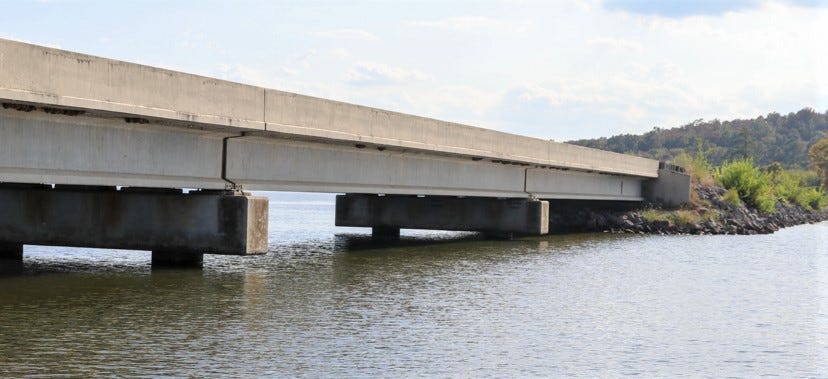
We drive over them in our cars. We ride under them in our boats, often on the way from one fishing hole to another. Many anglers hardly give them a second thought. But when it comes to crappie fishing, maybe bridges should be an angler’s first thought.
Fishing around bridges takes a lot of the guesswork out of finding crappie, says Oklahoma fishing guide Mike Taylor. Many of his favorite waters, including Lake Eufaula, are home to multiple bridges. He rarely drops a crappie jig in the water anywhere else before pulling up to a bridge area and looking with his electronics. He’s looking for baitfish and crappie.
Building glow into your crappie fishing strategies can help you catch more fish, especially when the bite is tough.
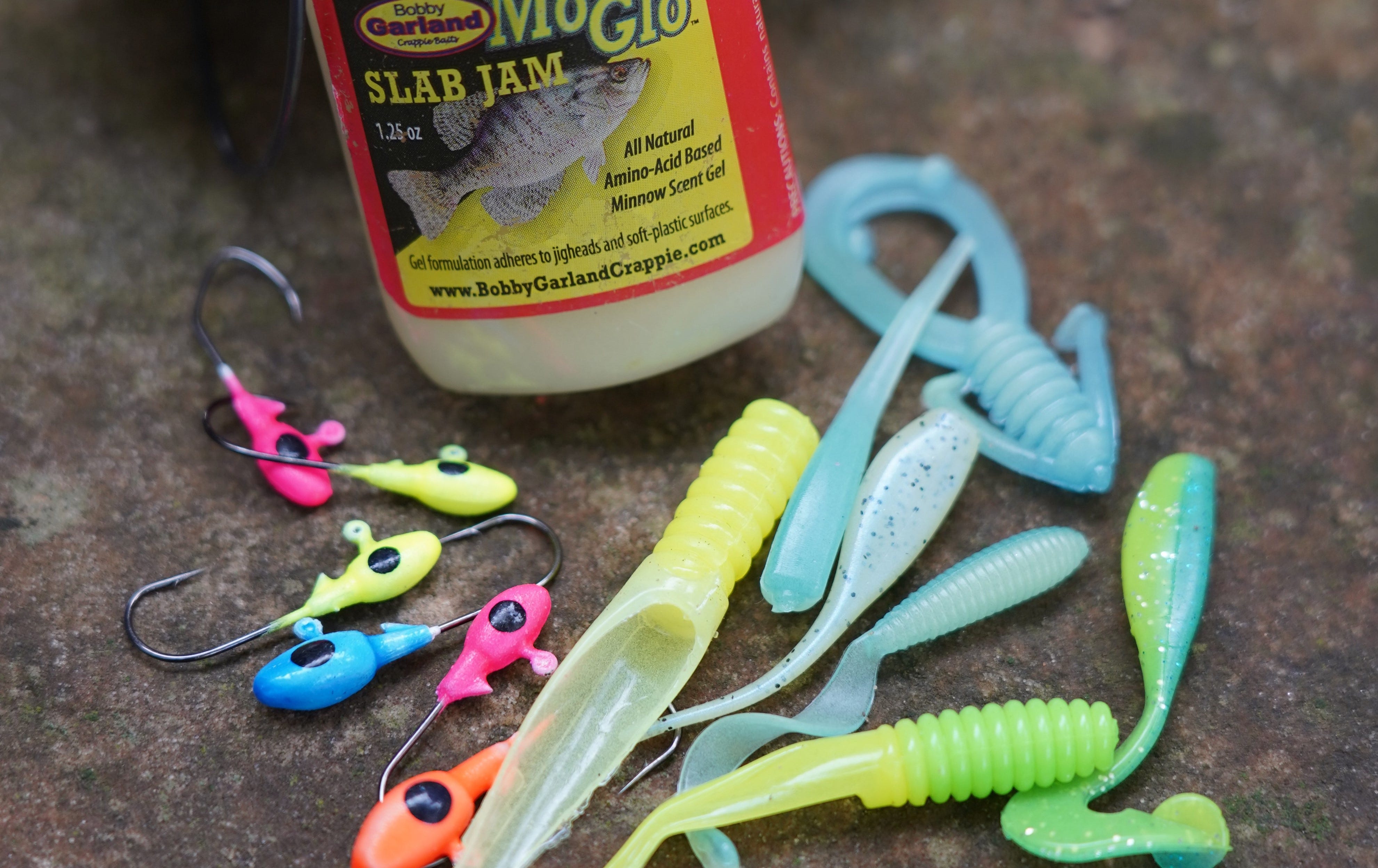
“Anyone can catch a crappie when they are biting, but when the crappie are not aggressive or the bite tapers off, that’s when using a Mo’ Glo lure or Mo’ Glo Slab Jam will get you bites,” said Mississippi crappie guide Brad Chappell.
Chappell relies on Bobby Garland’s Mo’ Glo lures, which glow in the dark, when fishing deep, early in the morning or late afternoon.
When long lining, Chappell will typically rig a 1/24- to 1/8-ounce Crappie Pro Mo’ Glo Jighead. The weight of the jighead depends on what depth he is targeting.
Crappie dock shooting expert Terry Blankenship pins fall as prime time for shooting. We asked him for the details about his favorite way to catch crappie.
“I’m sorry we picked such a busy lake day,” Terry Blankenship said with a wry grin as he made a U-turn on the ramp in preparation to back his boat down. There wasn’t another vehicle at the facility, nor a boat in sight, where we were launching on Missouri’s famed crappie water, Lake of the Ozarks.
“That’s the other thing I love about fishing this time of year, I pretty much have the lake to myself during the week,” Blankenship said.
The “other thing” reference wrapped up a discussion we’d had during our 20-minute drive from his home. Blankenship had been telling me why he likes fall best for dock shooting. “From now all the way up to the end of December, this is THE prime time to be dock shooting, and it’s absolutely the most exciting way to crappie fish I’ve ever experienced,” he said.
Learn about how crappie baits can be altered or accessorized to enhance opportunities to catch fish.
We fish: therefore, we are… tinkerers. We simply can’t resist the urge to make our crappie baits, well, “crappier.”
Some of our creations would make Dr. Frankenstein proud, while others would humble Rembrandt. Whatever the transformation, the only judge of its beauty lies in the beholder that waits at the opposite end of the line. And any crappie can have a mood that changes at the drop of a bait. The irony of it all is that a failed fishing outing can be just as inspirational in driving our quick return as one that filled the livewell quickly.